

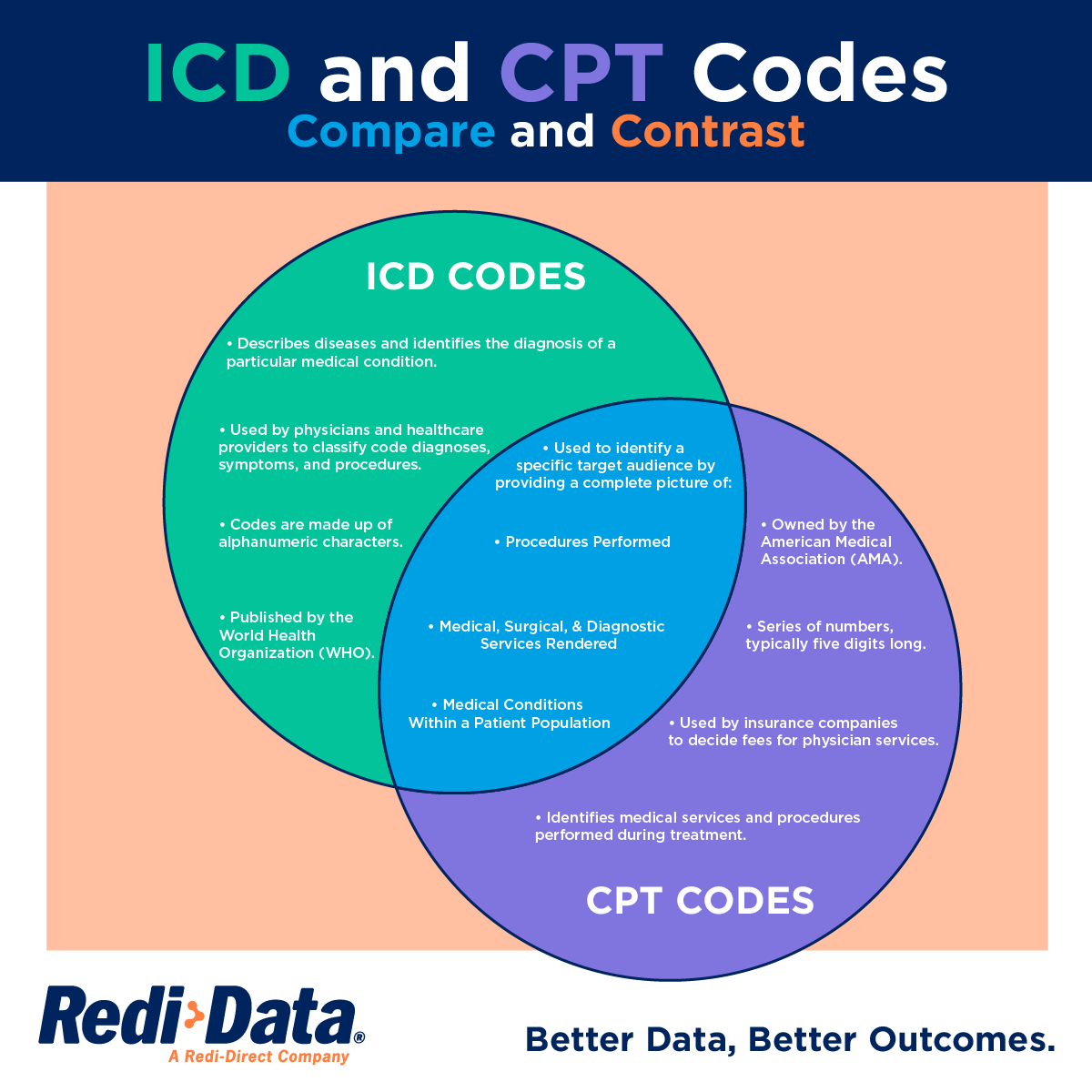
 ICD Codes: The ‘ICD’ is the International Statistical Classification of Disease-Related Health Problems. These codes focus on assigning one of thousands of possible diseases in addition to potentially harmful, traumatic, social, or environmental circumstances. What is the difference between ICD and CPT codes? While ICD codes describe diseases and identify the diagnosis of a particular medical condition, CPT codes focus on the medical services performed. The World Health Organization (WHO) publishes ICD codes, and physicians and other healthcare providers use them to classify and code diagnoses, symptoms, and procedures. An ICD code is easily recognized by its use of alphanumeric characters.
CPT Codes: CPT stands for Current Procedural Terminology and describes medical services performed during an appointment or consultation. These services range from diagnosis to surgery, laboratory results, or radiology. CPT codes identify the medical services and procedures performed during a patient’s treatment. The American Medical Association (AMA) owns these codes, and Redi-Data has been a trusted licensee of AMA data since 2010. CPT codes are usually presented as numbers, typically five digits long. Insurance companies often use these codes to determine the fees for a physician’s services. Additionally, coding updates are regularly made to ensure the accuracy and relevance. Additionally, coding updates are regularly made to ensure the accuracy and relevance.
Similarities: Both ICD and CPT codes are used to identify a specific HCP audience by providing a complete picture of the procedures performed. They clarify the medical, surgical, and diagnostic services rendered. Both codes can be used to determine medical conditions within a patient population.
Are you trying to understand what is the difference between ICD and CPT codes and how they can help you reach your healthcare professional audience? Redi-Data can assist by leveraging robust data on procedures and diagnose—using both ICD and CPT codes—to create refined physician postal and email lists or expansive digital reach for more focused and relevant communication. Contact a Redi-Data sales rep or visit www.redidata.com to learn more!
Better Data, Better Outcomes.
ICD Codes: The ‘ICD’ is the International Statistical Classification of Disease-Related Health Problems. These codes focus on assigning one of thousands of possible diseases in addition to potentially harmful, traumatic, social, or environmental circumstances. What is the difference between ICD and CPT codes? While ICD codes describe diseases and identify the diagnosis of a particular medical condition, CPT codes focus on the medical services performed. The World Health Organization (WHO) publishes ICD codes, and physicians and other healthcare providers use them to classify and code diagnoses, symptoms, and procedures. An ICD code is easily recognized by its use of alphanumeric characters.
CPT Codes: CPT stands for Current Procedural Terminology and describes medical services performed during an appointment or consultation. These services range from diagnosis to surgery, laboratory results, or radiology. CPT codes identify the medical services and procedures performed during a patient’s treatment. The American Medical Association (AMA) owns these codes, and Redi-Data has been a trusted licensee of AMA data since 2010. CPT codes are usually presented as numbers, typically five digits long. Insurance companies often use these codes to determine the fees for a physician’s services. Additionally, coding updates are regularly made to ensure the accuracy and relevance. Additionally, coding updates are regularly made to ensure the accuracy and relevance.
Similarities: Both ICD and CPT codes are used to identify a specific HCP audience by providing a complete picture of the procedures performed. They clarify the medical, surgical, and diagnostic services rendered. Both codes can be used to determine medical conditions within a patient population.
Are you trying to understand what is the difference between ICD and CPT codes and how they can help you reach your healthcare professional audience? Redi-Data can assist by leveraging robust data on procedures and diagnose—using both ICD and CPT codes—to create refined physician postal and email lists or expansive digital reach for more focused and relevant communication. Contact a Redi-Data sales rep or visit www.redidata.com to learn more!
Better Data, Better Outcomes.
Blogs
June 26, 2024
What Is The Difference Between ICD and CPT Codes?
Understanding what is the difference between ICD and CPT codes is essential for healthcare marketers who want to effectively leverage medical billing and insurance data. While they share certain similarities, learning the distinctions will allow your business to form more accurate connections and target your desired healthcare professional audience, particularly when focusing on specific CPT codes related to patient care.
Let’s explore whast is the difference between ICD and CPT codes and analyze some of their similarities.
 ICD Codes: The ‘ICD’ is the International Statistical Classification of Disease-Related Health Problems. These codes focus on assigning one of thousands of possible diseases in addition to potentially harmful, traumatic, social, or environmental circumstances. What is the difference between ICD and CPT codes? While ICD codes describe diseases and identify the diagnosis of a particular medical condition, CPT codes focus on the medical services performed. The World Health Organization (WHO) publishes ICD codes, and physicians and other healthcare providers use them to classify and code diagnoses, symptoms, and procedures. An ICD code is easily recognized by its use of alphanumeric characters.
CPT Codes: CPT stands for Current Procedural Terminology and describes medical services performed during an appointment or consultation. These services range from diagnosis to surgery, laboratory results, or radiology. CPT codes identify the medical services and procedures performed during a patient’s treatment. The American Medical Association (AMA) owns these codes, and Redi-Data has been a trusted licensee of AMA data since 2010. CPT codes are usually presented as numbers, typically five digits long. Insurance companies often use these codes to determine the fees for a physician’s services. Additionally, coding updates are regularly made to ensure the accuracy and relevance. Additionally, coding updates are regularly made to ensure the accuracy and relevance.
Similarities: Both ICD and CPT codes are used to identify a specific HCP audience by providing a complete picture of the procedures performed. They clarify the medical, surgical, and diagnostic services rendered. Both codes can be used to determine medical conditions within a patient population.
Are you trying to understand what is the difference between ICD and CPT codes and how they can help you reach your healthcare professional audience? Redi-Data can assist by leveraging robust data on procedures and diagnose—using both ICD and CPT codes—to create refined physician postal and email lists or expansive digital reach for more focused and relevant communication. Contact a Redi-Data sales rep or visit www.redidata.com to learn more!
Better Data, Better Outcomes.
ICD Codes: The ‘ICD’ is the International Statistical Classification of Disease-Related Health Problems. These codes focus on assigning one of thousands of possible diseases in addition to potentially harmful, traumatic, social, or environmental circumstances. What is the difference between ICD and CPT codes? While ICD codes describe diseases and identify the diagnosis of a particular medical condition, CPT codes focus on the medical services performed. The World Health Organization (WHO) publishes ICD codes, and physicians and other healthcare providers use them to classify and code diagnoses, symptoms, and procedures. An ICD code is easily recognized by its use of alphanumeric characters.
CPT Codes: CPT stands for Current Procedural Terminology and describes medical services performed during an appointment or consultation. These services range from diagnosis to surgery, laboratory results, or radiology. CPT codes identify the medical services and procedures performed during a patient’s treatment. The American Medical Association (AMA) owns these codes, and Redi-Data has been a trusted licensee of AMA data since 2010. CPT codes are usually presented as numbers, typically five digits long. Insurance companies often use these codes to determine the fees for a physician’s services. Additionally, coding updates are regularly made to ensure the accuracy and relevance. Additionally, coding updates are regularly made to ensure the accuracy and relevance.
Similarities: Both ICD and CPT codes are used to identify a specific HCP audience by providing a complete picture of the procedures performed. They clarify the medical, surgical, and diagnostic services rendered. Both codes can be used to determine medical conditions within a patient population.
Are you trying to understand what is the difference between ICD and CPT codes and how they can help you reach your healthcare professional audience? Redi-Data can assist by leveraging robust data on procedures and diagnose—using both ICD and CPT codes—to create refined physician postal and email lists or expansive digital reach for more focused and relevant communication. Contact a Redi-Data sales rep or visit www.redidata.com to learn more!
Better Data, Better Outcomes.
ICD Codes: The ‘ICD’ is the International Statistical Classification of Disease-Related Health Problems. These codes focus on assigning one of thousands of possible diseases in addition to potentially harmful, traumatic, social, or environmental circumstances. What is the difference between ICD and CPT codes? While ICD codes describe diseases and identify the diagnosis of a particular medical condition, CPT codes focus on the medical services performed. The World Health Organization (WHO) publishes ICD codes, and physicians and other healthcare providers use them to classify and code diagnoses, symptoms, and procedures. An ICD code is easily recognized by its use of alphanumeric characters.
CPT Codes: CPT stands for Current Procedural Terminology and describes medical services performed during an appointment or consultation. These services range from diagnosis to surgery, laboratory results, or radiology. CPT codes identify the medical services and procedures performed during a patient’s treatment. The American Medical Association (AMA) owns these codes, and Redi-Data has been a trusted licensee of AMA data since 2010. CPT codes are usually presented as numbers, typically five digits long. Insurance companies often use these codes to determine the fees for a physician’s services. Additionally, coding updates are regularly made to ensure the accuracy and relevance. Additionally, coding updates are regularly made to ensure the accuracy and relevance.
Similarities: Both ICD and CPT codes are used to identify a specific HCP audience by providing a complete picture of the procedures performed. They clarify the medical, surgical, and diagnostic services rendered. Both codes can be used to determine medical conditions within a patient population.
Are you trying to understand what is the difference between ICD and CPT codes and how they can help you reach your healthcare professional audience? Redi-Data can assist by leveraging robust data on procedures and diagnose—using both ICD and CPT codes—to create refined physician postal and email lists or expansive digital reach for more focused and relevant communication. Contact a Redi-Data sales rep or visit www.redidata.com to learn more!
Better Data, Better Outcomes.Tags
Billing Codes
CPT codes
Diagnosis Codes
Healthcare Coding
Healthcare Marketing
ICD-10 codes
Insurance Claims Data
Medical Coding
Procedure Codes
Related Posts


Latest Posts

08/06/26
Custom Medical Education Company Selects Redi-Data to Power Healthcare Education Initiatives
Fairfield, NJ – (August 6, 2026) – Redi-Data, Inc., a leading provider of healthcare, consumer,…
07/27/26
Global Consulting Firm Selects Redi-Data for Multi-Year Healthcare Data Partnership
Fairfield, NJ (July 27, 2026) – Redi-Data, Inc., a leading provider of healthcare, consumer, and…